Personal & sensory space
Define the space between adjoining riders and reduce the closeness of neighboring seats when clearer boundaries can support the trip.

Student-centered transportation
For some riders, a more defined seat boundary can support a better trip. Original Soft Shield gives transportation teams a soft, removable option for adding separation between seats.
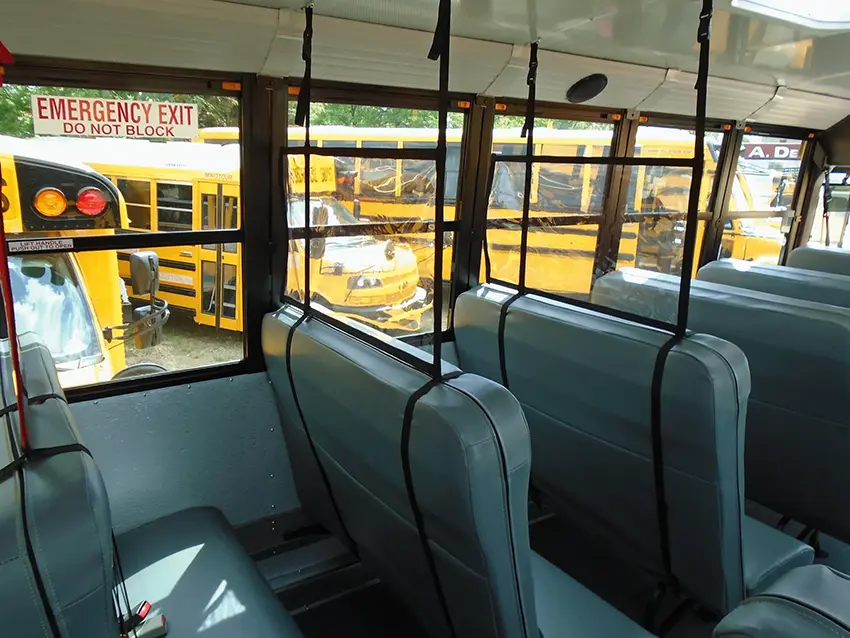
Use the space with intention
Student needs, seating plans, and bus assignments are never one-size-fits-all. The shield can help create a visible boundary while keeping the solution flexible for the transportation team.
Transportation teams often contact us when one particular student needs a clearer boundary—from special-needs transportation and sensory planning to behavior such as reaching or spitting toward neighboring riders. The shield can provide physical separation as one part of a district-approved transportation plan.
It is not a restraint or a substitute for an individualized transportation plan. It is a physical separation tool that can be considered alongside district policy, student needs, and vehicle requirements.
Where it can help
Define the space between adjoining riders and reduce the closeness of neighboring seats when clearer boundaries can support the trip.
Add a physical boundary when a transportation plan addresses reaching, spitting, or behavior directed toward neighboring or vulnerable riders.
Plan separation for small buses, wheelchair areas, specialized seating, or health-related requests.
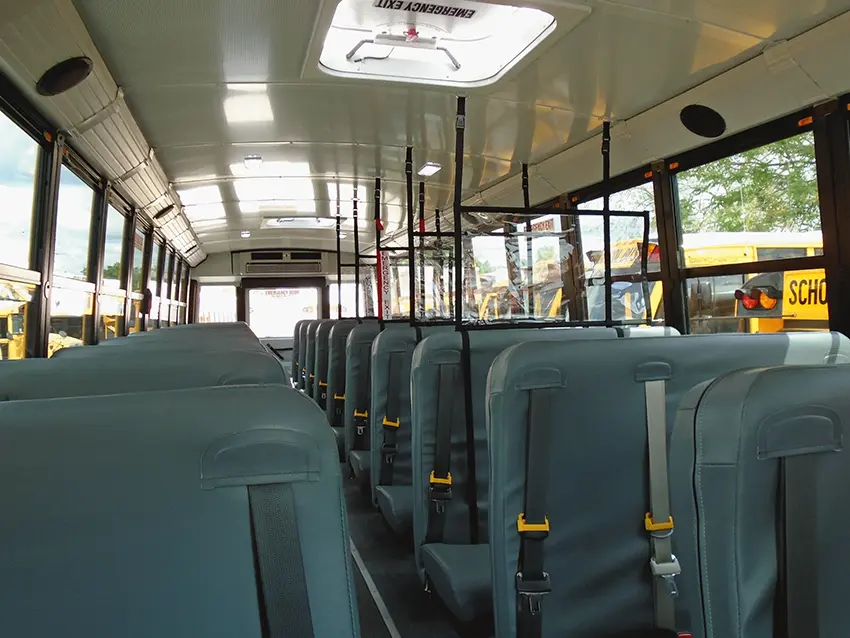
Keep the solution practical
The removable design allows transportation staff to reconfigure the bus rather than commit the vehicle to one permanent setup. The soft vinyl surface is also designed for straightforward cleaning and daily use.
Explore fit and featuresWhat it does
What it is not
Original Soft Shield does not replace supervision, a securement system, an IEP or transportation plan, district policy, or professional medical guidance. Each use should be evaluated by the responsible transportation team.
Plan around the rider
Share the bus type, seat location, intended use, and approximate quantity. We’ll help identify a practical configuration.