Separation during COVID-19
Developed as a soft, removable barrier for shared student transportation when physical separation became an urgent operating concern.

Our story
Original Soft Shield began when school transportation needed a fast, practical way to create separation during COVID-19. That origin remains part of the product—and gives districts another option when health concerns return.
 CDC Emergency Operations Center · 2020 · Photo: James Gathany / CDC
Preserving the heritage
During the pandemic, the need was immediate: help create physical separation on buses using a product that was soft, removable, cleanable, and practical for a working fleet.
As transportation needs changed, districts began looking at the same core product for student-specific space, specialized routes, and additional separation between adjoining seats. The product did not lose its original purpose; its useful role became broader.
How the purpose expanded
Developed as a soft, removable barrier for shared student transportation when physical separation became an urgent operating concern.
Retained as an option for added separation during influenza season, localized outbreaks, or individual health-related requests.
Used primarily where riders benefit from more defined personal space, a visible boundary, or specialized seating separation.
Health protection, carefully described
Original Soft Shield is a physical divider. It can be incorporated into an organization’s broader approach to spacing and vehicle operations, but it does not diagnose, treat, or guarantee prevention of illness.
Districts should follow current public-health guidance, cleaning procedures, vehicle requirements, and their own policies when using any barrier for health-related purposes.
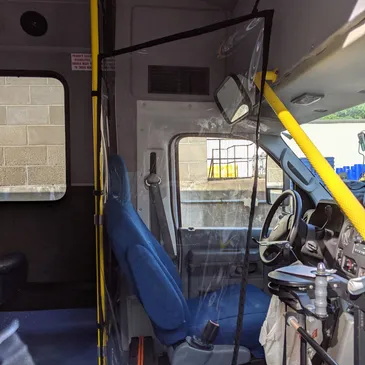
From the archive
The news and marketing archive preserves how Original Soft Shield entered the school transportation industry during an extraordinary period. Archived images may show earlier shield designs, materials, or mounting details that differ from products supplied today.
Open the archiveMore from the original launch
Additional pages from the launch archive show how Original Soft Shield was introduced and covered by the school transportation industry in 2020.
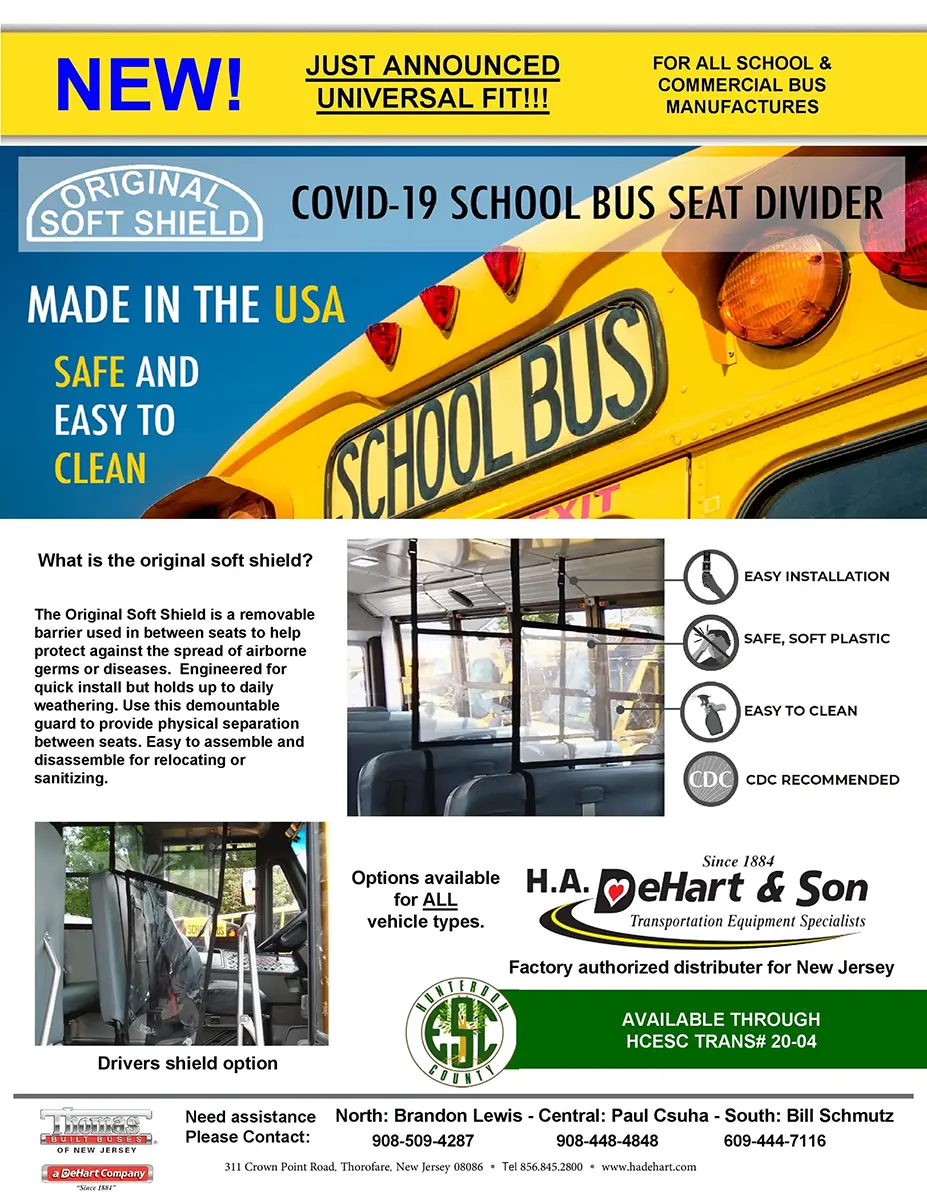
Original product literature
This preserved product overview introduced the shield’s soft construction, mounting approach, and school-bus application.
View the full flyer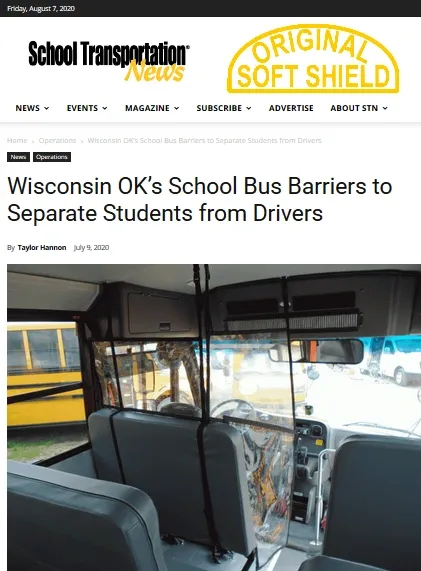
School Transportation News
Launch-era reporting documented Wisconsin’s conditional approval of school bus barriers and the Original Soft Shield.
Read the original article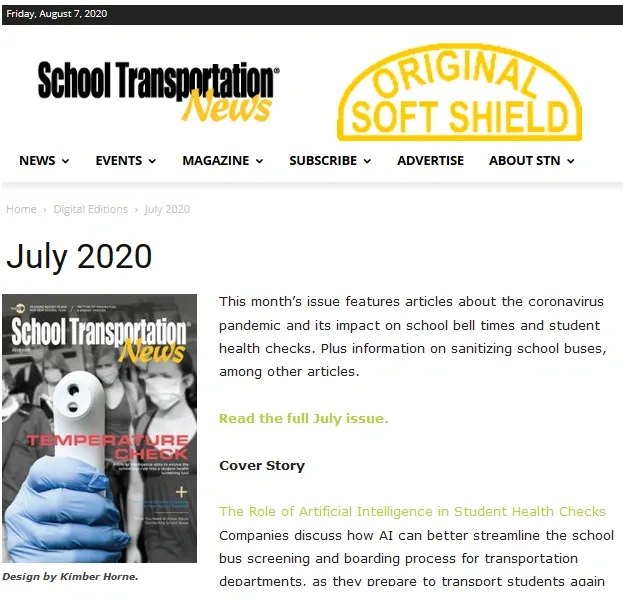
School Transportation News · July 2020
The archived issue displayed Original Soft Shield while reporting on the products and operating changes introduced across the school-bus industry.
Past purpose, present need
Share the bus type, seat location, intended use, and approximate quantity. We’ll help identify a practical configuration.